
Water around a water heater is one of the most common calls we get, and the first question is always the same: where is it actually coming from? Water runs downhill and pools at the lowest point, so the puddle is often nowhere near the source. It might be the temperature and pressure relief valve or its discharge line, the drain valve near the bottom of the tank, the inlet and outlet fittings on top, condensation on a cold tank, or a nearby pipe that has nothing to do with the heater. It might also be the tank itself, and that answer changes everything. In Louisville, KY, we trace the source before we touch a wrench.
Our diagnosis is methodical. We dry the area, check the relief valve outlet and discharge pipe, inspect the drain valve, and follow the hot and cold lines up to the fittings on top of the tank. On gas units, we check the combustion chamber for water, which can point to condensation or, more seriously, a failing tank. If the relief valve has been discharging, we measure static water pressure and check for thermal expansion, since a closed plumbing system without an expansion tank can push pressure high enough to open the valve. After all of that do we recommend a fix.
The repair depends on the diagnosis. Valve and fitting leaks are the good news: relief valves, drain valves, dielectric nipples, and flex connectors are stocked on our trucks, and we can often add an expansion tank or pressure-reducing valve the same day if pressure caused the problem. A leak from the tank body is the bad news, because steel that has rusted through cannot be repaired, and we will say so rather than sell a patch. In both cases, we help limit future damage with a properly drained pan, a leak alarm or automatic shutoff, and a quick lesson on your shutoff valve. Call (502) 205-4594 to have your leak traced in Louisville.
Our two most requested services are Water Heater Repair in Louisville and Water Heater Replacement in Louisville. Start there if you're not sure what you need.
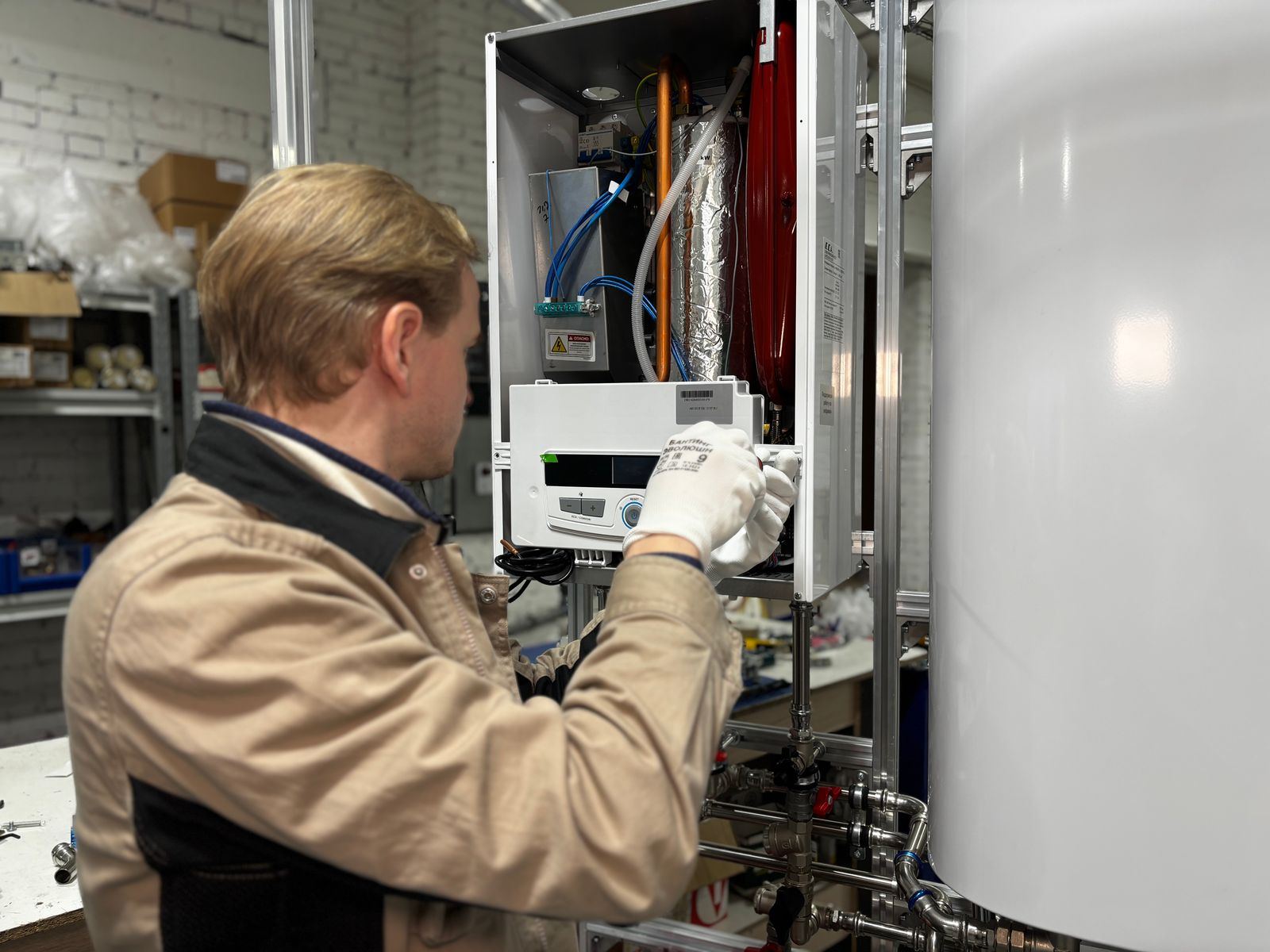
Signs You Need Water Heater Leak Repair in Louisville
Water heaters usually give plenty of warning before they fail, as long as you know what to look and listen for. These are the red flags our technicians see most often before a breakdown:
- Water inside the burner compartment of a gas heater
- Higher water use with no obvious explanation
- Corroded pipe connections or damp flex lines above the heater
- Brown hot water along with moisture around the tank bottom
- Water dripping from the relief valve or out of the end of its discharge pipe
- Warped baseboards or stained drywall beside the water heater
- A puddle or damp spot on the floor around the base of the tank
- A drain valve at the bottom of the tank that drips even when closed
A Slow Leak Never Stays Slow
Most water heater failures start small: a popping sound from sediment, a damp spot under the drain valve, or a shower that goes lukewarm a few minutes sooner each week. Call Louisville Water Heater at (502) 205-4594 at the first sign of trouble.
No Hot Water? We Can Help.
We'll diagnose the problem and give you a straight answer on the fix.
Tap to Call (502) 205-4594Your Water Heater Leak Repair Questions Answered
What a Trained Technician Brings to the Job
A leak looks like a simple job until you try to find it. Water can start at a top fitting, run down under the jacket, and show up at the base, and condensation on cold tanks add confusion. A wrong part is not the only risk. Plugging a dripping relief valve removes the protection against excess pressure and heat, forcing a corroded connection can crack it wide open, and electric heaters bring high-voltage wiring into a wet area. When the tank itself is the source, no DIY fix will hold for long.
Our technicians trace leaks methodically and fix the cause, not just the drip. We dry the unit, watch for fresh water, put a gauge on the system whenever the relief valve is involved, and check for expansion issues that cause weeping valves. We replace valves and fittings with quality parts, swap plastic drain valves for brass, and add an expansion tank or pressure-reducing valve when pressure is the root problem. When the tank is the problem, we say so directly and explain replacement options, including the drain pan and leak protection that can keep the next failure from soaking your floors.
Our Water Heater Leak Repair Process
Good water heater work comes down to a consistent routine, and ours starts with a real diagnosis instead of a guess. Here's how we handle water heater leak repair from start to finish:
Isolate the Leak
We help you close the cold supply and shut off gas or power, then move valuables and set up containment so the damage stops spreading.
Trace the Source
With the surfaces dried, fresh water shows us where the leak begins, whether that is a valve, a fitting, condensation on a cold tank, or the steel itself.
Measure What Caused It
If a relief valve is involved, we measure static pressure and check for an expansion tank, since high pressure will ruin a new valve fast.
Repair, Refill & Verify
The faulty valve or fitting is replaced, the tank is refilled and bled of air, and we watch the connections under pressure before we leave.
Repair or Replace? Let's Figure It Out.
Call Louisville Water Heater to talk through your situation with an experienced technician.
Get Help: (502) 205-4594How to Prevent Water Heater Problems
Most of the failures we see could have been delayed for years with basic upkeep. Put these technician-approved steps to work at home:
- A properly drained pan under the tank catches small leaks before they reach your floors
- Put a water leak sensor on the floor next to the tank so a drip gets noticed early
- Glance at the heater monthly for damp spots, rust, or crust on the fittings
- High street pressure is hard on water heaters, so a pressure test and regulator can prevent repeat drips
- Flush the tank once a year so sediment does not overheat the bottom and speed corrosion
- Inspecting the anode rod periodically is one of the best ways to delay a tank leak
- An expansion tank that is present and properly charged keeps the relief valve from opening every cycle
Comparing DIY and Professional Work
A few tasks, like checking the temperature setting or lifting the relief valve lever to test it, are fine for homeowners, but most water heater work involves gas lines, venting, 240-volt circuits, or a tank full of scalding water, and that belongs with a professional. Here's a comparison:
| Factor | DIY Attempt | Hiring a Pro |
|---|---|---|
| Finding the Source | Replace parts until the drip stops | Leak traced to its true starting point |
| Relief Valve | Valve capped to stop the drip, a serious hazard | Root cause fixed so the new valve stays dry |
| Old Fittings | Tightened until the fitting cracks | Corroded connections replaced with new fittings |
| Condensation vs Leak | Condensation mistaken for tank failure | False leaks ruled out with testing |
| Protecting the Home | Damage prevention skipped | Protection added where it matters most |
| Outcome | Temporary fix that may fail again | Lasting fix, verified under pressure |
Talk to Our Water Heater Leak Repair Team
Don't let a failing water heater get worse. Call Louisville Water Heater now for prompt, professional service.
Call (502) 205-4594 NowAreas We Serve for Water Heater Leak Repair
We serve Louisville and its neighboring towns for water heater leak repair, from quick same-day repairs to planned installs.